BC-348 FAQ
by Buzz Harrah, KE0MS
February 15, 1999
Originally posted to the MilSurplus
Mailing List
Calling all MIL-itants,
Recently you all came to my rescue when I needed
"Fatherly" advice on a BC-348 I'd found. Thanks to your
info, I've worked a deal with only pickup yet to take place. Your
pricing information especially helped the deal "gel".
I was asked by several thru direct mail if I could gather together
my info and publish it for all the other BC-348
"wannabe owners" out there, kind of as an FAQ or something. I
got almost 2-dozen responses over the weekend to send it, so, (not
knowing how many are on this list) I decided it's easier to let you
all get it and judge for yourself if you need it. Delete it if you
don't.
All of this info was contributed by YOU who responded, the members
of this list. You may recognize some of your comments. I moved them
around to most logically answer the questions posed in the FAQ I came
up with.
However, this info is presented to you AS IT WAS PRESENTED TO ME. I
could not/did not attempt to verify every fact I received. (How could
I?) And, you all know the "BA-Mantra", imported from another
source: "YOUR MILEAGE MAY VARY."
As we all have a perspective, I included all the pertinent data I
got and grouped in into the general categories you will see.
Enjoy. I did reading it as well as cutting and pasting it again.
And save it; as I think it's a good BC-348 primer.
Buzz
http://www.ia.net/~harrah/
mailto:harrah@ia.net
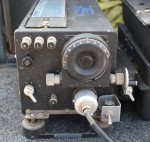
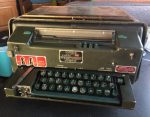
THE BC-348 RECEIVER- SO, WHAT IS THIS THING?
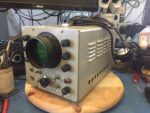
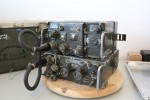
- The BC-348 was the main HF receiver in US Airforce bomber aircraft
in WW2, in conjunction with the BC-375 and ART-13 transmitters. The
original design was the BC-224 (US Army Signal Corps) and the BC-348
was the adaptation for the requirements of the Army Airforce. The
receiver as issued, runs on 24VDC (the standard DC voltage on
aircraft) and generates the required plate voltage (around 250VDC)
with a dynamotor which is inside the receiver.
- The BC-348 was my first "real" HF receiver in 1964 when
I first got my ham license and worked about 100 countries with it. Now
I have 2 of them, with an ART-13 transmitter, to functionally
duplicate the B-17/24/26 type bomber radio compartment and I use that
station quite often, mainly on the East Coast military collectors' net
on 75 M.
- These are pretty fair radios for AM and CW use. Not real
selective, but they do have a xtal filter and with an added
Q-Multiplier, they do nicely.
- Be prepared to replace every coupling/bypass cap. Not a hard job
as most are visible and usually strung between two posts on a phenolic
board. The filter caps may need help also as will some of the
resistors. I did a complete cap changeout and found only 3-4 resistors
out of tolerance. The whole job took a few hours, but she played
nicely when I finished.
- There were many other modification articles and books out
regarding the BC-348, so you can expect the receiver might have some
or all. One of mine was completely rewired by a previous owner, redone
top to bottom, and equipped with an AC power supply. Oh, yes it is
also painted bright shiny lime-green with gold Dymo labels. It worked
quite well, and after awhile the looks grew on you (like a fungus?) so
I never changed it. The other one is more original.
- The BC-348 is a great receiver, a little broad in the selectivity
department, but a neat way to cruise the bands! My first exposure to
shortwave came from a BC-348 so the radio has a little sentimental
value to me.
- My reason for knowing is that I had an unrestored one in High
School (a loooong time ago). It still had the dynamotor.
- Ah, the BC-348! One of my first military BA's. Used as a liason
receiver in B-17's and some other aircraft. We gave our boys good
stuff.
- Single largest problem with all the radios of this vintage is
paper capacitors. The '348 O uses about 18 or so of them and they're
all subject to failure. Normal procedure is to replace them all, check
tubes, etc. and an alignment. If the radio has seen regular
use, vs. sitting for years they seem to last much better.
THAT FUNNY 117VAC WIRING DYMO THING
Q: OK. This had one of those nasty DYMO label-maker-sticker-tapes
saying "117V WIRING." It plugged directly into the wall. Was
this unit usuable for different voltages with a tapped xfmr
arrangement, or had he modified his do you think?
- The BC-348 was primarely an aircraft receiver with the dynamotor
as the only INTERNAL power supply. There were external rack mount
110 vac supplies available in the military to run the radio on the
ground. This is probably a homemade conversion.
- When these receivers got to the surplus market, the first things
hams did, was to yank out the dynamotor and build a small power supply
that mounted where the dynamotor used to sit, for 115VAC to supply the
filament and plate voltages to the receiver.
- BC348s were aircraft receivers and used a dynamotor for the high
voltage generation. He modified it by removing the dynamotor and
replacing it with a power supply.
- Sounds like the BC348 has been modified enough to allow for a
built-in power supply. This was common practice when these things came
out on surplus market.
- I do know there were some mods that allowed 110 volts, but most
radios were just changed by removing the dynomotor and installing a
small power supply. I have not put a 110 supply in mine because there
is no way I can see to get the 110v into the case with out some type
of hole or rewiring the power plug, so for now I run it off the
dynomotor and it is a nice little radio with plenty of volume, but the
dynomotor is a little loud. I guess that wasn't a problem with 4 1200
HP engines running.
- The "117 wiring" label you noticed probably indicates
that someone modified the unit to have a 117-volt AC power supply
inside. The original BC-348s used a dynamotor to convert low-voltage
DC (28v, 3a for DM-28 dynamotor typically found) to the voltages
needed by the receiver. The open space intended for the dynamotor is a
good place to build an AC supply and many hams did so.
- Lots of them around, and there was a 117 volt model, but most were
modidifed to run on 110 by hams - they took out the dynamotor.
- Second, all BC-348s were bought by the military as 28 volt
aircraft radios, there were no military versions that operated on AC.
There was a 12 variant called the BC-224(actually as its number
implies, the 12 volt version came first, the 348 was the 28 volt
version, but a heck of a lot more of the 348 were built). All the AC
conversions you run into are most likely to be done after they were
released from military service. Note that a lot of the 348 were bought
by the airlines right after the second world war, so some of the
conversions were probably very professional looking, most of the ham
conversions that I have seen were very sloppy.
- There is a rumor, but no hard evidence that I have seen, that
Hallicrafters specifically made a drop in AC supply that replaced the
dynamotor, this would be easy to do mechanically-it would just be a
screwdriver operation, but if this is true there may be a concern that
one side of the AC line would be tied to the chassis-a definite safety
concern.
- The AC supply was a common mod and there were many variations.
They were normally built onto the same chassis that the dynomotor was
mounted on. If you can get the original mount bracket with shock
mounts, that is a real plus.
- I have a BC-348Q that is in great shape. Still has the dynamoter
in it, and the ac supply is very neatly tucked up underneath it.
- Normally they were 28VDC with a dynamotor. You can bet it was
modified.
THAT OUT-OF-PLACE-LOOKING 2 X 6 PANEL
Q: The rig had a approx. 2" x 6" panel screwed on the right
side, centered, covering what may have been some sort of --- what? Was
there a knockout on these rigs that allowed adding something?
- This pannel is standard equipment on the BC-348. It provides
access to the underside of some of the tube sockets. They ALL have
them.
- The panel you describe allows one to reach the tube sockets and
some capacitors. Designed to look "plain" with 6 screws
holding it down.
- I have a BC-348Q and it is complete from the box(no mods) the 2X4
panel is to get at the tube bases for alignment, checking etc.
- The plate you mentioned is original, it is just an access plate to
allow service on components in that area. Once you dig into the radio,
you will see why they put it there. It was also a good place for hams
to mount extra pots and switches.
- This is quite a nice receiver when working properly. The plate you
mentioned on the right side of front panel is used to cover the socket
connections for several of the tubes. The chassis is an aluminum
CASTING, neat stuff for 1943!
- That plate on the front panel is supposed to be there and allows
access to the bottom of the tube sockets mounted along the front
panel.
- It allowed access to the RF and Mixer stage components under the
tube sockets.
VARIANTS OF THE BREED
Q: Were there several variants of this rig? This one went .1-.4
MCs, Then went from 2- about 20 MCs if I remember right. Skipped the
BC band.
PRICING THUMBNAILS
Editor's note: My unit described as "kinda dirty", but
should clean up ok; but no obvious mods other than 117VAC mod. The
117VAC modification was the "ONLY" MOD that seemed to not
significantly detract from the desirability of buying one of these
units. While the original DYNAMOTOR was preferred by the masses, this
mod is so common that it was felt (or at least I detected) that
getting one that HADN'T been modded in this way was highly unlikely
and should NOT be cause to pass a unit by.
Also, any comments relating to EBAY are indications of PRICING
PHENOMENON in today's market ONLY, and do not constitute an
endorsement of EBAY selling or indicate that EBAY sold-equipment is
better. It simply indicates that more is paid for these rigs on EBAY
than at the normal hamfest-type outlets available.
Q: What is one of these things worth? (ballpark estimates are
fine.)
- I got one of these beauties (BC-348-R) and it was converted to AC
and works very well/ Going prices range from $80 to $200 depending on
condition, etc.
- Typically bring $70 to $150 at swap meets, depending on condition,
but sometimes up to $200+ on the Ebay internet auction site.
- I paid $45 for mine. Seen them on e-bay for up to $150. A modified
one in fair condition should be about $35-50. A pure, unmodified,
original condition one with dynamotor might go for $175 or so and in
my estimation would be worth it.
- The case should have no other holes, just the cut out for the 8
pin power-audio plug. There are several sites that have the manual
on-line. As for price I would say $150-200. E-bay has changed the
price of things lately. I paid $100 for mine about a year ago.
- Value - anywhere up to $140.00 depending on condition. Most go for
$50 - $75.00 at flea markets, $75.00 up on the internet.
- As far as price, the typical price I have seen for a ham modified
unit with no added holes on the panel, an AC supply and missing the
shock mount and connector that mounts on the shock mount, is about
$75. Less than that for added S meters, front panel switches and other
mods, more if it has the shock mount, connector and original
dynamotor. I would say that a military original complete unit would be
about 150, but I haven't actually seen one of these offered for sale
so that's just a guess.
- The BC 348's go - depending on condition and the owner's
willingness to part with them - for anywhere between $50 for a heavily
modified or good parts unit to $150 for a very good, unmodified radio.
It may be even a tad more if the receiver is mint, as issued and has
the original dynamotor in it. The dynamotors are scarce and sometimes
cost almost as much as the radio itself. I personally paid $100 for
each of my BC-348's, with homebrew AC supplies in them (good
workmanship, however) and good cosmetic shape, in working condition.
- $50.00 to $100.00. Sounds tike your find would be on the low end.
- I have seen them (348s) occasionaly for sale, and I think that
Fair radio had some a few years ago. I seem to remember they were
around $100. Could be wrong, but I think thats right.
TO PERSUE OR EVADE?
Q: Can anybody help me with specific info, advice to persue or
evade, etc?
- GET IT.......... you'll love it and you'll have a piece of
history.
- They are OK radios, but modern radios are MUCH better. On the
other hand if you are a tube nut, then they are a must have along with
an R390A.
- Just remember that SSB was not in use when they were used, that
came later. Even the R390A receiver did not support SSB.
- If you like old tube collectables, then it might be right for you.
- I have a BC-348Q that is in great shape.
- All in all a neat radio.
- I've had several over the years and always enjoyed modifying,
using, and abusing them.
- I got mine for repairing a BC radio for a friend, cost me a
resistor, two 40 UF 450 volt caps, and two diodes. Had to solid state
an old Circa 1930s radio. The rectifier tube had a burnt out filiment.
No possible spares. I was given the BC-348 even thought I didn't
really want it at the time. Now I wouldn't mind having it here [while
away from home].
- It is a lot lighter than my R-390A!
- Looks like I will be able to buy 2 BC-348s this weekend. Matching
transmitter too. There are Antenna tuning units too.
Editor's note: I got almost nothing on Antenna tuning units,
other than it is believed there are several, as part of the
"Liason Sets", using the ART-13 transmitter, of which this
unit is part.
RELATED COMMENTS TO MY ORIGINAL POST (RELEVANT)
Editor's note: About 1/4 of the replies I got tell me I should
GRAB the TEST SETS, or GRAB THEM and sell them to THEM! You guys must
like these ARC-5s things, too.
And here's what some said about the ARC-5s (relevant to the
BC-348):
Q: The now SK had an OS-8B scope, URM-25D sig generator, a mil
audio generator (I can't remember make or model right now) and... the
BC-348. He also had some ARC-5 stuff, including a BC Band one. But, I
have some questions about the BC-348:
- As to the ARC-5 receivers, they're in demand today - they were the
"command" radio set for shorter range HF communications on
many aircraft in WW2 together with the ARC-5 series transmitters. The
BC band ARC-5 receiver was generally used by hams as a second, tunable
IF for the BC-348 (which has an IF frequency of 915 KHz) to provide
additional selectivity to the BC-348. The ARC-5 antenna terminal can
be coupled to one of the BC-348 IF stages with a small capacitor, and
use the ARC-5 for the audio output. This gives you a nice selectivity
and tunable second IF without hacking into the BC-348 which is getting
scarcer and scarcer.
ADDITIONAL REFERENCES AVAILABLE
FINAL CLOSING THOUGHTS:
This kind of sums all this old MIL stuff collecting up pretty well.
I'd made an off-hand comment on how excited I was finding this little
receiver, and here is the comment that I got back. I couldn't have
made a better "straight" guy on Vaudeville!
Q: Thank you for all your answers. Very interesting reading. And,
this "mil" stuff is starting to grow on me.
A: That's what that 'MFP' coating was for inside the old gear :-)
:-) :-)
Back to Mark's Green Radio Page